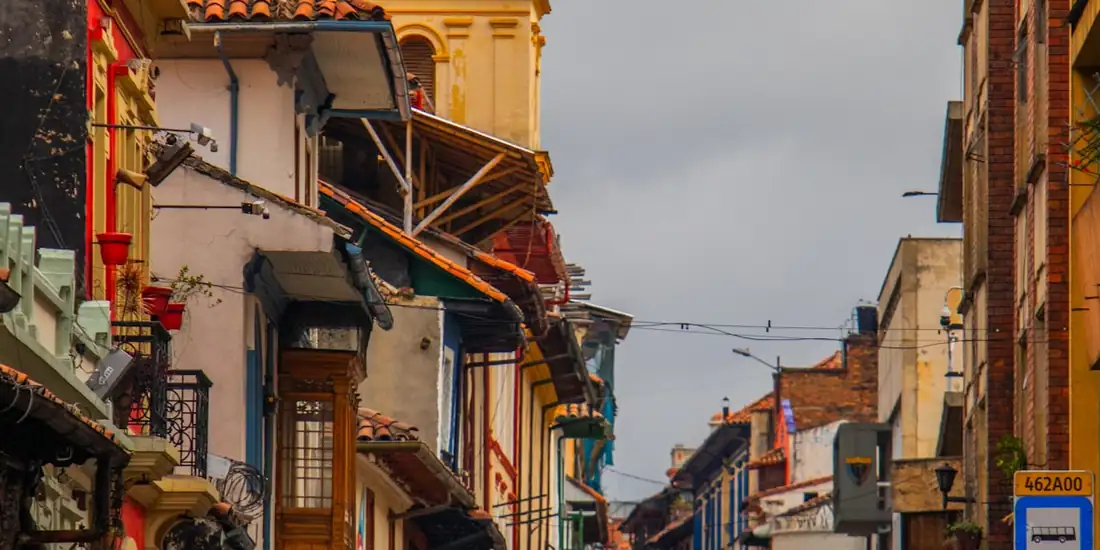
Best Neighbourhoods in Bogotá for Expats & Digital Nomads
From the leafy streets of Chapinero Alto to the buzzing café culture of La Candelaria, here's where to actually live in Bogotá — with real prices and zero fluff.
Bogotá is a big, sprawling, occasionally overwhelming city of eight million people. Ask a local where you should live and they'll probably just say "not in the south" — which isn't particularly helpful. Ask an expat who arrived six months ago and they'll swear by wherever they ended up, usually by accident.
This guide cuts through that. Whether you're after a quiet apartment near good coffee and a gym, a buzzing neighbourhood with rooftop bars and coworking spaces, or a family-friendly barrio with parks and international schools nearby, Bogotá has options. You just need to know where to look.
A quick note on altitude: Bogotá sits at 2,600 metres above sea level. Give yourself a week to acclimatise before you decide whether you hate it.
Chapinero Alto: The Expat Sweet Spot
If you land in Bogotá and ask the expat community where they live, a significant chunk will say Chapinero Alto. There's a reason for that.
Stretched across the hills between Carrera 7 and the eastern cerros (the mountains that flank the city's eastern edge), Chapinero Alto has the feel of a small European neighbourhood awkwardly transplanted into a Andean city — and that's not a bad thing. Streets are walkable, there are independent cafés on nearly every block, and the general safety feel is solid, particularly on and around Calle 67 and towards Zona Rosa.
The restaurant scene is excellent. You're close enough to the Zona Rosa (sometimes called the "T" — after the T-shaped intersection of Calle 82 and Carrera 13) to access its upscale restaurants and bars without paying its rents. A corrientazo (the set lunch meal that is the backbone of Colombian daily eating) runs about 12,000–18,000 COP at a local place; a proper sit-down lunch with a glass of wine at a mid-range restaurant will set you back 50,000–80,000 COP.
Rent for a furnished 1-bed: 2,000,000–3,500,000 COP/month depending on finishes and whether it includes administración (the monthly building maintenance fee, which can add 200,000–400,000 COP on top).
Coworking-wise, you're close to WeWork's Bogotá locations and a handful of independent spaces like Selina. Gyms are plentiful — BodiFit, SmartFit, and local independent gyms all have outposts nearby.
Best for: Digital nomads, young professionals, solo expats in their late 20s and 30s.
Watch out for: Noise on weekends near the bars around Calle 85. Also, the hills mean walking home from a night out involves a genuine uphill climb. Worth it, but noted.
El Poblado... Wait, Wrong City: Zona Rosa & Usaquén
Two words Bogotá expats either love or love to complain about: Zona Rosa and Usaquén.
Zona Rosa (bounded roughly by Calles 79–85 and Carreras 11–15) is Bogotá's glossiest neighbourhood — high-end malls like El Retiro and Andino, rooftop bars, sushi restaurants, and the kind of place where you'll overhear more English than Spanish on a Friday night. It's safe, polished, and extremely convenient. It's also expensive and, depending on your taste, a bit soulless.
Usaquén, further north around Calle 119, has a village-within-a-city feel. The old colonial centre of Usaquén (it was originally a separate town before Bogotá absorbed it) is genuinely charming — a small plaza, excellent Sunday market (Mercado de las Pulgas de Usaquén), and some of the best restaurants in the city. The surrounding barrio is quieter, greener, and popular with families and older expats.
Rent for a furnished 1-bed in Zona Rosa: 3,000,000–5,500,000 COP/month. You're paying the postcode.
Rent for a furnished 1-bed in Usaquén: 2,500,000–4,500,000 COP/month.
Both areas are well-served by TransMilenio (Bogotá's bus rapid transit system) and the city's growing metro line. Supermarkets like Carulla and Éxito are within easy walking distance.
Best for: Zona Rosa suits expats who want convenience and don't mind paying for it; Usaquén suits families, retirees, and anyone who values greenery and quiet evenings over nightlife proximity.
Watch out for: In Zona Rosa, stay alert with your phone out on the street late at night — this applies city-wide, but tourist-heavy areas attract opportunist theft. In Usaquén, you're quite far north; getting anywhere in the centre takes time.
La Macarena: Character Without the Price Tag
Tucked between Chapinero and La Candelaria, La Macarena is one of those neighbourhoods that feels like it's still a local secret even though expats have been trickling in for years. It borders the Cerros Orientales and the Parque Nacional — Bogotá's largest urban park — which means you can go for a morning run without breathing traffic fumes.
The streets are narrow, the buildings are a mix of mid-century apartment blocks and older houses, and the restaurant and bar scene has real personality. Andrés Carne de Res has an outpost here. There are gallery spaces, independent bookshops, and some of the better jazz bars in the city. It feels like a neighbourhood where people actually live rather than just consume.
Rent for a furnished 1-bed: 1,600,000–2,800,000 COP/month — noticeably cheaper than Chapinero Alto or Zona Rosa.
There's less coworking infrastructure here, but you're a short taxi or app ride (use InDriver or Cabify — Uber operates in a grey area in Colombia but is widely used) from the rest of the city. The neighbourhood has enough cafés with decent wifi to keep most remote workers going without a dedicated desk.
Best for: Creative types, writers, artists, expats who want texture and character over polish.
Watch out for: Some streets bordering La Candelaria and the centro get rougher quickly. Know where the neighbourhood ends. The general rule: don't walk east past Carrera 1 after dark.
Teusaquillo: Underrated, Affordable, and Genuinely Liveable
Teusaquillo doesn't appear on most expat radar, and that's a shame. Sitting between Chapinero and the city centre, it's one of Bogotá's most architecturally interesting barrios — full of 1930s and 40s English-style houses built during a period when Bogotá's upper class had a thing for Tudor-ish aesthetics. The result is an oddly endearing streetscape.
Rent is noticeably lower here. A furnished one-bedroom apartment runs 1,400,000–2,200,000 COP/month. For that you'll often get more space than the same money buys you in Chapinero.
The neighbourhood is well-connected to TransMilenio, close to several universities (including the Universidad Nacional), and home to a range of supermarkets, local restaurants, and parks. The corrientazo scene is strong — you can eat a proper three-course set lunch for 10,000–14,000 COP in the local fondas.
Best for: Budget-conscious nomads, academics, anyone who wants a genuine local neighbourhood experience without paying expat prices.
Watch out for: It's not quite as walkable at night as Chapinero or Usaquén. The proximity to the university area means it can get chaotic during term time. Not much of a nightlife scene if that matters to you.
Laureles... No, Wait — La Quinta Camacho & Chicó
Two smaller barrios worth knowing: La Quinta Camacho and Chicó.
La Quinta Camacho sits just east of Chapinero Alto and has a quieter, more residential character — good for people who want to be close to the action without being in the middle of it. Rent sits around 1,800,000–2,800,000 COP for a furnished one-bed.
Chicó, roughly between Calles 90–100 and Carreras 7–15, is the city's old money neighbourhood — wide tree-lined streets, excellent Carulla supermarkets, good security infrastructure, and a notable density of international schools. It's less exciting than Chapinero or La Macarena but genuinely comfortable.
Rent in Chicó: 2,800,000–5,000,000 COP/month for a furnished one-bed.
Best for: Families, executives on company packages, expats who want calm and comfort.
How to Actually Find an Apartment
Now the practical bit. Here's how Bogotá apartment hunting actually works:
Finca Raíz (fincaraiz.com.co) is the biggest dedicated property portal in Colombia. Filter by "amoblado" (furnished) and "arriendo" (rental). Listings are in COP. Most are legitimate; some are stale — always confirm availability before getting excited.
Properati (properati.com.co) has a cleaner interface and good filtering, though slightly fewer listings than Finca Raíz. Worth checking both.
Facebook Groups are genuinely useful, particularly for the expat-facing furnished short-let market. Search "Bogotá Expats", "Apartments for Rent Bogotá", or "Digital Nomads Colombia" — you'll find landlords posting directly, which cuts out the agent (and sometimes the admin fees).
Walking and looking for "Se Arrienda" signs — don't underestimate this. Many landlords in Bogotá, especially older ones, don't post online. A Saturday morning walk through Chapinero Alto or Teusaquillo with your phone ready to photograph signs can turn up real gems. Take photos of the number displayed and WhatsApp directly — almost all contact in Colombia happens on WhatsApp.
Airbnb is a legitimate option for your first month while you get your bearings. It's expensive relative to long-term rates, but buying yourself time to find a proper apartment without committing to a bad neighbourhood is worth the premium.
A few practicalities: most long-term rentals require a Colombian codeudor (a local guarantor) or equivalent financial documentation. As a foreigner, you'll likely be asked for bank statements, proof of income, and sometimes a larger deposit (two to three months is common). Having a Colombian-registered bank account (Bancolombia and Nequi are most expat-friendly) helps significantly.
Finally: the administración fee is separate from rent in almost all apartment buildings. Always ask what it is before agreeing to anything — it can add 10–20% to your effective monthly cost.
The Bottom Line
Bogotá rewards people who do a bit of research. Chapinero Alto and Usaquén are safe bets for comfort and convenience. La Macarena and Teusaquillo offer more character and better value. Chicó and Zona Rosa work well if budget isn't the primary concern.
Spend your first week in an Airbnb, walk the neighbourhoods you're considering, eat the corrientazo in local spots, and see how each barrio feels at 8am and 10pm. The city reveals itself differently at different hours — and the neighbourhood you thought you wanted on arrival is often not the one you end up loving.
Sponsored content
Maia Realty
Find your ideal property in Colombia with Maia Realty