Cost of Living in Medellín, Colombia (2026 Guide)
A real-numbers breakdown of what it actually costs to live in Medellín in 2026 — from budget backpacker to comfortable digital nomad to full expat professional.
Medellín keeps getting more expensive. Anyone who moved here five years ago will tell you the same thing — rents in El Poblado have nearly doubled, a decent flat white now costs what a corrientazo used to, and the days of living like royalty on $800 a month are firmly in the past. That said, compared to most Western cities, Medellín is still genuinely affordable. You just need to know what you're walking into.
This guide gives you real 2026 prices — in Colombian pesos — for everything from your monthly rent to your Sunday bandeja paisa. No fluff, no outdated numbers copied from a blog written in 2019.
Rent: Where You Live Makes All the Difference
Rent is your biggest variable and it swings wildly depending on neighbourhood. Here's the honest picture:
El Poblado (the obvious expat hub, and yes, it's priced accordingly): A furnished one-bedroom in a decent building with a gym and rooftop will run you 2,800,000–4,500,000 COP/month. For a two-bedroom with a view and good Wi-Fi, expect 5,000,000–7,500,000 COP. Unfurnished drops the price by roughly 20–30%, but most landlords in Poblado know their market and aren't negotiating hard.
Laureles and Estadio are the sweet spot most experienced expats migrate to after their Poblado phase. Quieter, more local, better food, still very walkable. A furnished one-bed here typically costs 1,800,000–2,800,000 COP/month, with solid unfurnished options starting around 1,400,000 COP.
Envigado (technically a separate municipality but functionally south Medellín) offers even better value — think 1,500,000–2,200,000 COP for a furnished one-bedroom — along with a noticeably calmer pace and excellent local restaurants along Avenida El Poblado south of the park.
Belén and Robledo cater to the longer-term expat or someone genuinely embedding in the city. Furnished one-beds here go for 1,000,000–1,600,000 COP/month. You'll be living alongside Colombians rather than other foreigners, which some people love and others find challenging if their Spanish is still shaky.
A word on Airbnb and short-term rentals: a month-to-month furnished flat via Airbnb in El Poblado can easily cost 6,000,000–9,000,000 COP/month for something decent. If you're staying longer than a month, get off Airbnb and find a direct landlord. Facebook groups like "Expats in Medellín" and "Medellín Housing" are the best starting points.
Utilities
For a one-bedroom apartment, expect to pay roughly:
- Electricity (EPM): 80,000–180,000 COP/month — this one surprises people. Medellín has a stratificación (socioeconomic zoning) system, so your bill depends on both your actual usage and your building's estrato (1–6). Higher estrato means higher rates. Air conditioning, if you use it, will push you toward the top of that range.
- Water and sewage (EPM): 30,000–70,000 COP/month
- Gas (natural gas via EPM): 15,000–35,000 COP/month — very cheap, mostly used for the stove
- Internet: 70,000–120,000 COP/month for 100–300 Mbps fibre. Claro and Tigo are the main providers. Claro tends to have wider coverage; Tigo often gets better reviews for customer service. ETB is worth checking in some zones. Most furnished flats include internet — confirm before signing.
Total utilities for a single person in a furnished one-bed: roughly 200,000–400,000 COP/month, not counting internet if it's included in your rent.
Groceries
D1 and Ara are where savvy locals and budget-conscious expats do most of their shopping. A weekly basket of staples — eggs, rice, beans, pasta, bread, fruit, vegetables, chicken — will run you roughly 80,000–130,000 COP. Monthly grocery spend at these discount chains: 300,000–500,000 COP for one person eating fairly well.
Éxito (the Colombian Tesco equivalent) costs more but has a wider selection, including imported goods. Monthly shop: 500,000–800,000 COP depending on how many imported luxuries you buy. The Éxito on Avenida El Poblado and the one in San Diego mall are well-stocked.
Local markets (plazas de mercado) like Plaza Minorista near Parque de Berrío or the weekend market in Laureles are where you get the real prices. A kilo of tomatoes for 2,000 COP, a massive bunch of plátanos for 3,500 COP, a whole chicken for 18,000–22,000 COP. If you have the time to go weekly, you'll eat very well for 200,000–350,000 COP/month on produce alone.
Eating Out
A corrientazo — the set lunch menu that includes soup, a main plate (typically rice, beans, meat, salad, and a jugo), and sometimes a small dessert — runs 12,000–18,000 COP at a typical local tienda or small restaurant. This is genuinely one of the great value meals in the world. You'll find them everywhere outside of Poblado.
Mid-range restaurants — think a proper sitdown meal with a starter, main, and beer at somewhere like the restaurants along Avenida Jardín in Laureles or around Parque Poblado — will cost 60,000–120,000 COP per person.
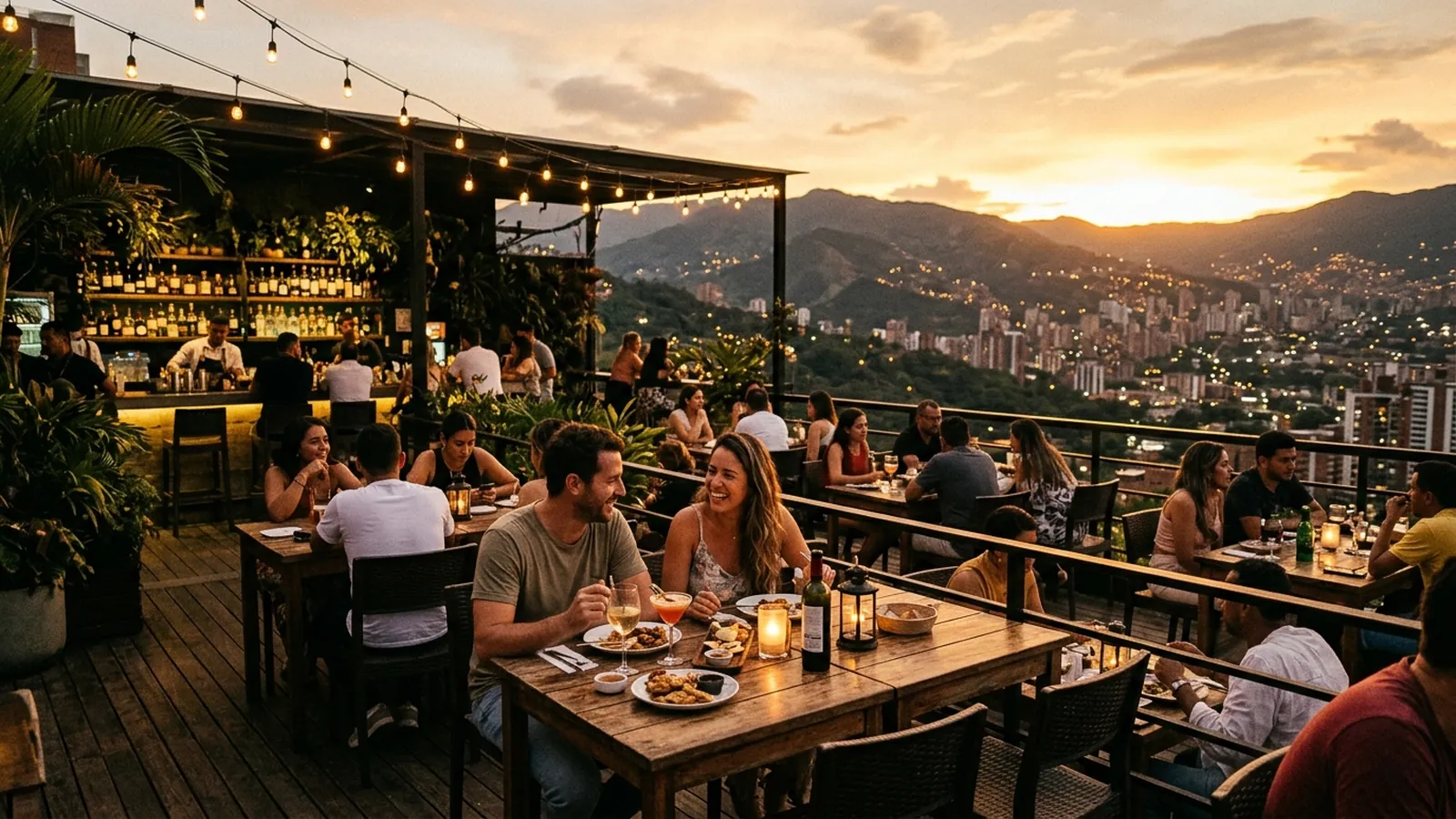
Upscale dining in El Poblado or Provenza: 150,000–300,000 COP per person with wine. A cocktail in a Provenza rooftop bar: 25,000–45,000 COP.
A decent tinto (black coffee, small): 2,000–4,000 COP at a local café. A flat white or specialty espresso at Pergamino or Urbania: 12,000–18,000 COP.
Transport
The Metro system (metro, metrocable, and tranvía combined) costs 3,400 COP per trip or you can load a Cívica card and get marginally better value on volume. A heavy metro user might spend 100,000–130,000 COP/month. The system is clean, reliable, and covers more of the city than most people expect.
Buses (SITVA integrated system): Same Cívica card, same fare structure. Local feeder buses (alimentadores) connecting to metro stations are free with a metro swipe.
Taxis and ride apps: InDriver and Didi are the dominant apps. A trip within El Poblado: 8,000–15,000 COP. Poblado to Laureles: 15,000–22,000 COP. Airport (José María Córdova in Rionegro) to the city: 70,000–100,000 COP by app, more in a yellow taxi. Locals use InDriver heavily because you can negotiate the price — useful for longer trips.
Realistic monthly transport budget for a digital nomad who works from home and goes out regularly: 150,000–250,000 COP.
Healthcare
Colombia's healthcare system has two main tracks for residents and those with legal visa status:
EPS (contributory public health insurance): If you're working legally or have an income-generating visa, you can contribute to EPS. Monthly contributions are income-based but typically 100,000–300,000 COP/month for an independent worker paying the minimum. Coverage is broad but waiting times can be long and specialist access is slower.
Medicina prepagada (private health insurance): Providers like Sura, Colsanitas, and Coomeva offer private plans. Expect to pay 350,000–700,000 COP/month for a solid individual plan depending on your age and coverage level. This gets you access to private clinics, faster appointments, and better facilities. For most expats, this is the recommended route.
Out-of-pocket costs are still very reasonable by Western standards: a GP consultation at a private clinic runs 40,000–80,000 COP, a specialist 80,000–150,000 COP, and a basic blood test panel around 50,000–100,000 COP.
Entertainment and Social Life
A cinema ticket at Cine Colombia: 16,000–28,000 COP (3D/premium costs more). A domestic beer at a bar: 7,000–12,000 COP. A craft beer from a local brewery like Apóstol or 3 Cordilleras: 14,000–22,000 COP. A bottle of Club Colombia from a tienda: 4,500–6,000 COP.
Weekend activities — hiking El Cerro de las Tres Cruces, visiting the Jardín Botánico, exploring the Pueblito Paisa — are largely free or cost under 10,000 COP. A day trip to Santa Fe de Antioquia by bus: roughly 25,000–35,000 COP each way.
Realistic monthly entertainment budget: 300,000–600,000 COP for a social but not extravagant lifestyle.
Gym Memberships and Coworking
Gyms: SmartFit locations (there are several across Medellín) run 75,000–95,000 COP/month for a basic plan. Independent gyms in Laureles and Belén can be found for 50,000–70,000 COP/month. High-end gyms in Poblado (Bodytech, etc.) charge 150,000–250,000 COP/month.
Coworking spaces: Selina (multiple locations) offers day passes for 40,000–60,000 COP and monthly memberships from 450,000–700,000 COP. Atomhouse in El Centro and Espacio Coworking in Laureles are popular alternatives. A proper dedicated desk with fast internet and meeting room access: 600,000–900,000 COP/month.
Monthly Budget Summary
| Category | Budget (Backpacker) | Comfortable (Digital Nomad) | Premium (Expat Professional) | |---|---|---|---| | Rent | 1,000,000 | 2,200,000 | 4,500,000 | | Utilities + Internet | 150,000 | 280,000 | 450,000 | | Groceries | 300,000 | 500,000 | 800,000 | | Eating Out | 150,000 | 400,000 | 900,000 | | Transport | 100,000 | 200,000 | 300,000 | | Healthcare | 0 (travel insurance) | 400,000 | 650,000 | | Entertainment | 150,000 | 400,000 | 700,000 | | Gym / Coworking | 70,000 | 500,000 | 800,000 | | Total (COP) | ~1,920,000 | ~4,880,000 | ~9,100,000 | | Total (USD approx.) | ~$470 | ~$1,190 | ~$2,220 |
USD conversions based on approximate 4,100 COP/USD exchange rate. Verify current rates before planning.
How Does Medellín Compare to Other Colombian Cities?
Bogotá is typically 15–25% more expensive than Medellín for rent and food, particularly in Chapinero and Usaquén. Transport there is cheaper per trip but you'll use it more given the distances.
Cartagena has tourist-area pricing that makes El Poblado look moderate. A furnished flat in Bocagrande or Getsemaní easily runs 3,500,000–6,000,000 COP/month for something decent.
Cali is meaningfully cheaper — rents in El Peñón or Granada run roughly 20–30% less than equivalent neighbourhoods in Medellín — but the safety calculus is different and infrastructure is less reliable.
Manizales and Pereira (the other Eje Cafetero cities) offer the lowest cost of living in the region, with furnished flats available for 900,000–1,500,000 COP/month, though the expat infrastructure and coworking scene are much thinner.
The bottom line: Medellín in 2026 rewards people who live a bit like locals. Get out of El Poblado, shop at D1, eat corrientazos for lunch, and use the Metro. Do that and you can live genuinely well for under 4,000,000 COP a month. Insist on replicating a Western lifestyle in a tourist-facing neighbourhood and you'll spend two or three times that — still cheap by London or Toronto standards, but you'd be missing the point.
Sponsored content
LlevaLleva
Connect with your local community on LlevaLleva