Best Neighbourhoods in Medellín for Expats & Digital Nomads
From the buzzing cafés of El Poblado to the leafy streets of Laureles, here's where expats and digital nomads actually live in Medellín — with real prices and honest opinions.
Medellín has a habit of getting under your skin. The weather is genuinely perfect (locals call it the Ciudad de la Eterna Primavera — City of Eternal Spring — and for once that's not tourism copy, it's just true), the cost of living is hard to beat, and the city has proper infrastructure for remote workers. But where you live matters enormously here. The wrong barrio can leave you feeling isolated, overcharged, or just bored. The right one can feel like the best decision you've ever made.
Here's a practical breakdown of where expats and digital nomads actually end up — and why.
El Poblado: The Obvious Choice (With Caveats)
El Poblado is where most expats land first, and there are solid reasons for that. It's walkable, comparatively safe, stuffed with cafés and coworking spaces, and you can get by entirely in English if you need to while you find your feet. Parque Lleras is the social epicentre — surrounding streets are lined with restaurants, rooftop bars, and the kind of craft cocktail places that would fit in comfortably in Shoreditch.
The vibe is polished and convenient. You're a short walk or quick taxi from Carulla (the upmarket supermarket chain), Éxito, and a dozen decent gyms. Coworking is everywhere — Selina has a location here, and there are smaller independent spaces like Atomhouse scattered around the neighbourhood.
Typical rent: A furnished one-bed in a decent building runs 2,500,000–4,000,000 COP per month. Anything with a balcony, rooftop pool, or close to Parque Lleras pushes toward the top of that range or beyond. Short-term furnished rentals via Airbnb or direct landlords skew even higher.
Who it suits: First-timers, people who want ease over authenticity, anyone on a corporate relocation package who isn't paying out of their own pocket.
Watch out for: Noise if you're near the nightlife streets (Calle 9 and surrounds get loud Thursday through Sunday). It also has a gringo premium baked in — restaurants, bars, and landlords all know the market. It can feel like a bubble after a while, and some long-term expats quietly admit they wish they'd looked elsewhere sooner.
Laureles: The Expat Sweet Spot Most People Eventually Find
Ask any expat who's been in Medellín more than six months where they'd live if they could do it again, and a large chunk will say Laureles. It has the infrastructure of El Poblado without the inflated prices or the party-hostel energy. The streets are wider, lined with mature trees, and the neighbourhood feels genuinely residential — families, professionals, and a growing expat community that's integrated rather than ghettoised.
The main drag, Circular 73 (locally called Las Circulares), is excellent for day-to-day life: independent coffee shops, bakeries, affordable restaurants, a Carulla, several gyms, and a cluster of coworking spaces. A corrientazo (the traditional set lunch — soup, main, juice, and sometimes a small dessert) runs about 12,000–18,000 COP at the local spots here, which tells you what you need to know about the pricing difference from El Poblado.
Typical rent: A furnished one-bed apartment goes for 1,800,000–3,000,000 COP per month. You get more space for your money than El Poblado, and quality is generally high — there's been a lot of new residential construction in the area.
Who it suits: Digital nomads who've been in Medellín a few months and want to settle properly, couples, anyone who values a real neighbourhood feel over nightlife proximity.
Watch out for: It's less walkable to the metro than El Poblado (though buses and taxis are easy), and the nightlife is quieter — that's a feature for some, a bug for others.
Envigado: The Calmer, Cheaper Alternative to El Poblado
Technically a separate municipality that borders El Poblado to the south, Envigado has historically been overlooked by expats but is increasingly popular with people who want the proximity to El Poblado without the prices or the noise. The parque principal (main square) area has a proper small-town feel — there's a market, family-run restaurants, and locals who haven't been completely priced out.
It's also genuinely affordable. A corrientazo near the parque can still be found for 10,000–14,000 COP. Supermarkets, gyms, and even a handful of coworking spaces are all present. The metro connects you to the rest of the city in minutes.
Typical rent: A furnished one-bed runs 1,500,000–2,500,000 COP per month. You can get a genuinely spacious apartment here for what a basic studio costs in El Poblado.
Who it suits: Budget-conscious nomads, retirees, people who want a quieter base and are happy to hop on the metro or grab an InDriver (the local alternative to Uber that locals use constantly) to get to El Poblado when they want it.
Watch out for: Less English spoken, fewer expat-facing amenities. For some people that's the whole point; for others it becomes an issue faster than expected.
Estadio / Belén: Off the Expat Radar, Genuinely Local
If you want to actually live like a paisano (the term for people from the Antioquia region, and one you'll hear constantly in Medellín) this is where you look. The Estadio neighbourhood, centred around the Atanasio Girardot sports complex, is middle-class, practical, and completely unaffected by the gringo premium. Belén, just to the south, is similar — large, residential, with multiple distinct sub-barrios each with their own character.
You'll find Éxito supermarkets, local markets, tiendas on every corner, and a strong neighbourhood restaurant scene. The metro line runs through, making the rest of the city accessible. There are some coworking options, though fewer than in El Poblado or Laureles — most people who live here and work remotely tend to work from home or commute elsewhere for coworking days.
Typical rent: 1,200,000–2,000,000 COP per month for a furnished one-bed. Unfurnished options are even cheaper if you're planning a longer stay and want to kit out your own place.
Who it suits: Long-term expats who speak decent Spanish, people on tighter budgets, anyone who genuinely wants immersion over convenience.
Watch out for: You'll need Spanish. Not optional here the way it arguably is in El Poblado. Also research specific streets before committing — both neighbourhoods are large and quality varies considerably by block.
El Centro / Prado: For the Urban Explorers
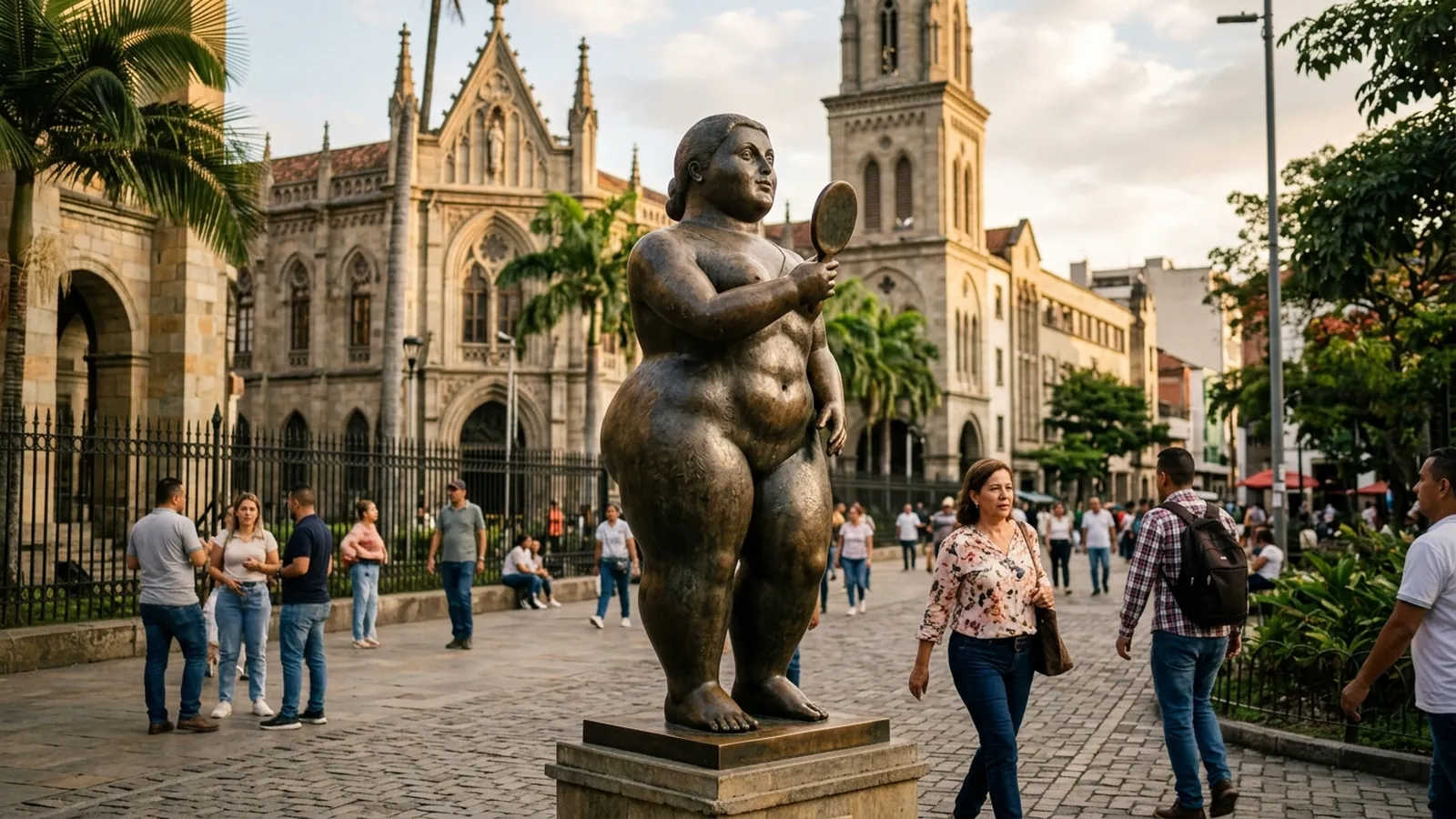
Most relocation guides skip El Centro entirely, which is understandable but a shame. The historic centre and the elegant early-20th-century neighbourhood of Prado just north of it are extraordinary places — grand architecture, the Botero Plaza, local markets, and a raw urban energy you don't get anywhere else in the city. Prado in particular has some beautiful old houses and apartments that rent for a fraction of what equivalent space would cost in El Poblado.
That said, this isn't for everyone. El Centro requires street awareness, particularly around Parque Berrío and the Minorista market area. Prado is calmer but needs some research.
Typical rent: Prado furnished one-beds can go for as little as 900,000–1,600,000 COP per month, though good furnished options are harder to find.
Who it suits: Experienced travellers, people who've lived in other Latin American cities, urban architecture enthusiasts, anyone who finds the El Poblado bubble suffocating.
Watch out for: Do your research on specific streets and buildings. Ask in expat Facebook groups (more on those below) rather than relying on generic advice. This is not a good first neighbourhood for someone arriving in Colombia for the first time.
How to Actually Find an Apartment
Estate agents exist but aren't always necessary or helpful for furnished short-to-medium term rentals. Here's how most expats actually find places:
Finca Raíz (fincaraiz.com.co) is the dominant Colombian property portal and has the most listings. Filter by amoblado (furnished), your chosen barrio, and price range. Listings are in COP and mostly in Spanish, but it's navigable.
Properati has a smaller but useful inventory and tends to be slightly more user-friendly.
Facebook groups are arguably the most useful for expats. Search "Medellín Expats," "Medellín Digital Nomads," and neighbourhood-specific groups. Landlords who want English-speaking tenants post directly here, and you can ask for recommendations and warnings about specific buildings.
Walking around still works, particularly in Laureles and Envigado. Look for Se Arrienda signs (For Rent) on buildings. Calling the number directly often gets you a better price than going through a portal.
InDriver and Yango (not Uber, which left Colombia — locals use InDriver) are useful for neighbourhood-hopping during your search.
One practical note: many landlords ask for a codeudor (a Colombian guarantor) for longer leases. As a foreigner you won't have one. Come prepared to offer two or three months' deposit upfront, or use agencies that specialise in expat rentals — they exist in El Poblado and Laureles and absorb the risk for a small premium.
The Bottom Line
El Poblado is fine for a first month while you orient yourself, but most expats who stay longer than that end up migrating toward Laureles or Envigado once they realise what they're overpaying for. If you speak Spanish, Estadio or Belén offer a completely different and genuinely richer experience of the city. El Centro and Prado reward the people willing to do the homework.
The best approach: book a month in El Poblado or Laureles, spend the first two weeks exploring other barrios on foot and via the metro, then commit. Medellín rewards people who take the time to get past the obvious.
Sponsored content
Maia Realty
Find your ideal property in Colombia with Maia Realty