Things to Do in Medellín: A Local's Guide
Skip the tourist trail. Here's how people who actually live in Medellín spend their time — from free street art walks to hidden market gems and proper day trips into the Andes.
If you've been in Medellín longer than a week, you already know the standard tourist loop: Pablo Escobar tour, Parque Lleras drinks, cable car selfie. Fine for your first weekend. But there's a version of this city that takes a bit longer to find, and it's considerably better.
This guide is written for people who are staying — whether that's a month or a few years. It's organised by how you'll actually use it, not by what looks good in a listicle.
Cultural and Historical Sites Worth Your Time
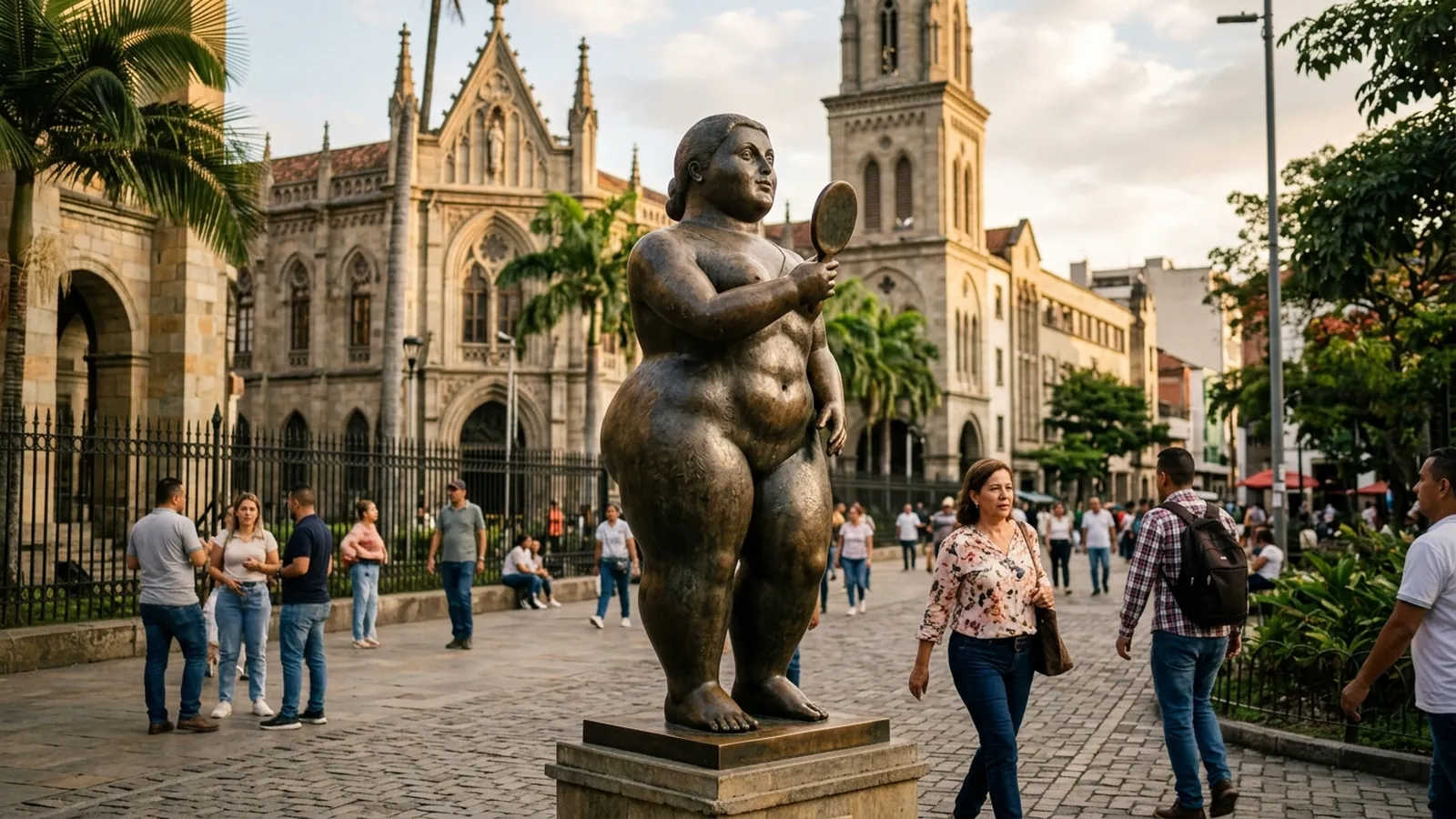
Museo de Antioquia (Parque Botero, El Centro) is the obvious starting point, and it earns its reputation. Entry costs around 30,000 COP for foreigners, and it houses the largest collection of Botero's work outside of his personal donation to Bogotá. Don't skip the pre-Columbian rooms upstairs — most people do, and they're genuinely fascinating. Open Tuesday–Sunday, 10am–5:30pm.
Right outside is Parque Botero itself, free and permanently accessible. The 23 bronze sculptures are technically a museum without walls. It's also one of the most socially mixed public spaces in the city — vendors, schoolkids, office workers, tourists — and worth lingering in.
Casa de la Memoria (Calle 51 #36–66, Barrio Boston) deals with Colombia's armed conflict and internal displacement in a way that's honest and well-curated. Entry is free. It's not a light afternoon, but if you're going to understand why this city is the way it is, this helps. Closed Mondays.
Museo El Castillo in El Poblado is tucked away and perpetually undervisited. It's a French Gothic mansion from the 1930s set in French-style gardens. Entry is around 15,000 COP. Go on a weekday morning when it's nearly empty and it feels genuinely atmospheric rather than touristy.
For street art, Comuna 13 (San Javier metro station, then escaleras eléctricas — the outdoor escalators) is legitimately impressive and not just a photo opportunity. The murals document real history. Go on a weekday to avoid the weekend crowds. Local guides offer tours from around 20,000–30,000 COP — worth it for context. The escalators themselves are free.
Outdoor Activities and Nature
Medellín sits in a valley at 1,495 metres, surrounded by cloud-forested mountains. Getting into them is easier than most residents realise.
Arví Park is reached by taking the Metro to Acevedo, then the Metrocable Línea K to Santo Domingo, then transferring to Línea L. The cable car to Arví costs 4,150 COP each way (integrated metro fare). Inside the park there are marked trails, a small organic market on weekends, and proper altitude — it sits around 2,600 metres and feels nothing like El Poblado. Ideal for a Saturday morning.
For something less structured, the neighbourhoods of Santa Elena and Piedras Blancas (both reachable by bus from the terminal near Industriales or via taxi/Uber for around 25,000–35,000 COP) offer quiet rural Colombia within 45 minutes of the city centre.
Rock climbing has grown quickly in Medellín. El Peñón de Guatapé is the obvious destination (see weekend trips below), but if you want to climb more regularly, look up Medellín's climbing gyms — Zona Vertical in Laureles is popular with the local community and day passes run about 25,000–35,000 COP.
Free Things to Do
This city rewards people who walk. Laureles and Estadio neighbourhoods are excellent for an afternoon wander — the Avenida El Poblado–Laureles corridor has independent coffee shops, bookshops, and bakeries without the gringo-menu pricing of El Poblado's Parque Lleras area.
Jardín Botánico (Carrera 52 #73–298) is free on weekdays and is genuinely one of the better botanical gardens in South America. The orchid house and the giant lily pond are the highlights. It also has one of the best casual lunch spots in the city — food stalls inside sell a corrientazo (set lunch: soup, main, juice, dessert) for 12,000–15,000 COP. It shares a block with Parque Explora and the Planetarium — useful if you have kids or a rainy afternoon.
The Pueblito Paisa on Cerro Nutibara is a slightly kitsch replica of a traditional Antioquian village, but the hill itself offers a decent view over the city and the walk up is free. Go at dusk.
Almost every barrio has a cancha (an outdoor concrete football pitch) where pickup matches happen in the late afternoons from around 4pm. You don't need to be invited — just show up and wait. Paisa football culture is very inclusive if you're not terrible.
Markets and Shopping
Mercado del Río (Calle 24 #45–29, El Centro/Barrio Colombia) is a food market with around 30 stalls — not a supermarket, more of an indoor artisanal food hall. A bit pricier than eating on the street, but the quality is consistently good and it's a useful option if you're hosting guests. Budget 25,000–45,000 COP per person for a proper meal.
Mercado de San Alejo runs on the first Saturday of each month in Parque El Poblado and the last Saturday in Parque de Bolívar (El Centro). It's a craft and art market with genuinely original work — ceramics, leather goods, prints, jewellery. Prices are negotiable and the quality is noticeably higher than souvenir shop stuff.
For produce, skip the supermarkets and go to Plaza Minorista (Calle 55 with Carrera 57, El Centro). It's loud, sprawling, and occasionally overwhelming, but a bag of tropical fruit that costs 20,000 COP at Carulla costs about 6,000 COP here. Get there before 9am.
El Hueco (also El Centro, around Calle 45–50 between Carreras 52–58) is where Medellín goes to buy almost everything at a discount — electronics, clothing, household goods. It's not Instagram-friendly. It is very useful.
Unique Local Experiences Most Tourists Miss
Watching Nacional or DIM at Atanasio Girardot. Football in Medellín is different from football elsewhere. Atlético Nacional and Deportivo Independiente Medellín (DIM) share the Estadio Atanasio Girardot and their rivalry is one of Colombia's most intense. Tickets via Tu Boleta run 35,000–120,000 COP depending on the stand. The popular terraces (popular norte/sur) are cheaper and considerably more atmospheric — go with someone who knows the drill the first time.
A Sunday ciclovía on Avenida El Poblado. Every Sunday from around 7am to 1pm, major roads close to traffic. Hire a bike from one of the roadside vendors (roughly 10,000–15,000 COP/hour), grab a fresh juice, and join half the city. It's normalised and enormous — and completely free.
Tejo. Colombia's national sport involves throwing metal discs at a clay target packed with small gunpowder charges. When you hit one, it explodes. There are tejo courts in Laureles and Aranjuez. Expect to pay around 8,000–12,000 COP per person for a court and it usually includes a beer. No experience needed — it's easier than it sounds.
Classes and Workshops
Salsa and cumbia classes are available all over the city. In Laureles, several independent academies offer group lessons from around 20,000–35,000 COP per hour. If you're serious about dancing, Medellín is actually better for cumbia and vallenato instruction than Cali is for salsa — though Caleño salsa schools do have satellite operations here.
Cooking workshops focusing on Antioquian cuisine — bandeja paisa, mondongo, arepas de chócolo — are offered through various cultural centres and private kitchens. Check Airbnb Experiences for vetted options (prices around 80,000–150,000 COP per person) or ask at your neighbourhood social media groups for community kitchen workshops, which are often far cheaper.
Spanish and Portuguese classes at EAFIT University (Laureles) are open to non-students at very reasonable rates. Group classes run about 80,000–120,000 COP per month. More structured than private tutors, and you'll meet other people integrating into the city.
Rainy Day Options
Medellín gets rain most afternoons between April–May and September–October. Plan for it.
Parque Explora (next to the Jardín Botánico) is a science museum with a proper aquarium — one of the best freshwater aquariums in South America, featuring fish from the Amazon, Magdalena, and Orinoco basins. Entry is around 30,000–35,000 COP. It's technically for kids but adults who aren't too proud about it enjoy it thoroughly.
Cinema Tonalá (Calle 33 #32A–05) is a cultural cinema screening independent, Latin American, and classic international films with a bar and food inside. Tickets run 15,000–20,000 COP. Check their social media for current programming.
Independent coffee shops in Laureles and El Poblado — particularly the specialty coffee scene around Calle 10 — are genuinely good places to work or read for a few hours without being made to feel like you need to move on.
Weekend Trips from Medellín
Guatapé (1.5–2 hours by bus from Terminal del Norte, around 16,000–20,000 COP each way) is peak Antioquian landscape — a painted colonial town on the edge of a vast reservoir, with El Peñón (a 200-metre granite monolith, 22,000 COP to climb) as the centrepiece. Go on a Saturday, not a Sunday — Sunday is chaos.
Jardín (3–3.5 hours from Terminal del Sur, around 30,000–40,000 COP) is an immaculately preserved coffee-growing town in the mountains south of Medellín. Slower-paced, cooler, proper coffee. Worth two nights if you can manage it.
Santa Fe de Antioquia (roughly 2 hours by bus from Terminal del Norte, about 18,000–25,000 COP) was the original colonial capital of the region and has the architecture to prove it. It's hot — genuinely hot, around 900 metres compared to Medellín's 1,495 — so pack accordingly. Good for a long day trip or overnight.
Getting Around
The Metro is clean, reliable, and covers the main corridor. Integrated fares using a Cívica card (buy at any metro station for around 6,500 COP, then load credit) cover the metro, Metrocable, and connecting buses. A single journey costs around 3,350 COP.
Uber and InDriver are the main app-based options. Taxis are also fine — use Tappsi or Easy Taxi apps to call one rather than flagging from the street, especially at night.
For anything outside the metro corridor, a basic knowledge of which terminal (Norte or Sur) and an approximate fare via InDriver will get you almost anywhere in Antioquia.
Sponsored content
LlevaLleva
Discover local services and experiences in Colombia