Best Neighbourhoods in Santa Marta for Expats & Digital Nomads
From the leafy calm of El Rodadero to the colonial streets of the Centro Histórico, here's where to actually live in Santa Marta — with real prices and zero fluff.
Santa Marta doesn't get the same hype as Medellín or Cartagena, and honestly, that's part of the appeal. It's a real Colombian city — gritty in places, gorgeous in others — sitting between the Caribbean coast and the Sierra Nevada mountains. If you've decided this is your base, the next question is: which part of the city actually makes sense for your life?
Here's a practical breakdown of the neighbourhoods worth considering, with real prices and the stuff no one tells you until you've already signed a lease.
Centro Histórico — For the Culture Obsessives
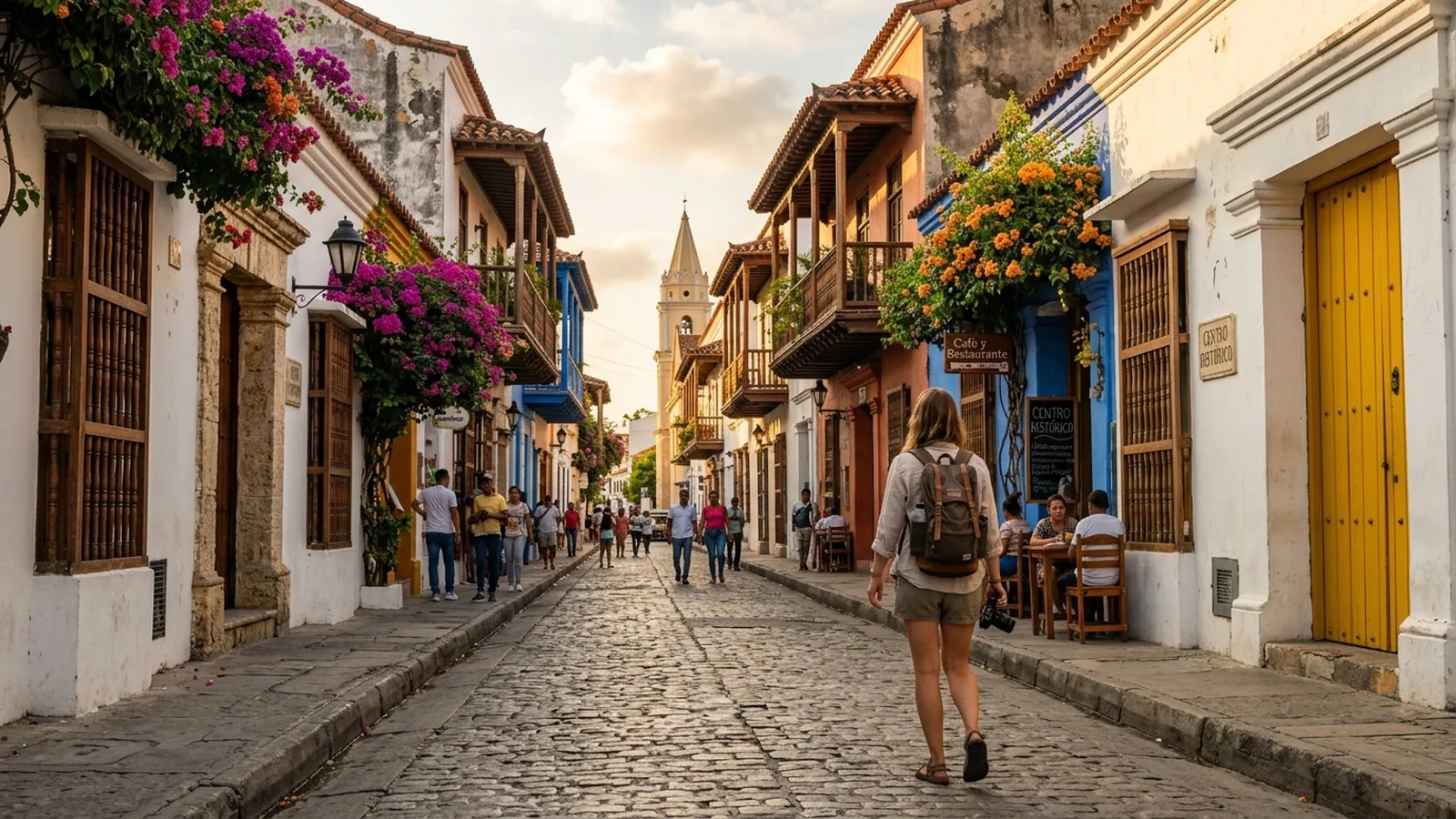
The historic centre is Santa Marta's oldest neighbourhood, and it shows — in the best and most complicated ways. The streets around Parque de los Novios and Carrera 3 are lined with colonial buildings painted in fading pastels, boutique hostels, and some genuinely good restaurants that have figured out the tourist-to-local balance.
Vibe: Loud, alive, and best appreciated if you don't mind the chaos. Street vendors, mototaxis, and cumbia spilling out of open doors are all part of the deal. Walkability is excellent — you can reach the malecón (seafront promenade), markets, and the main bus hub on foot. Safety has improved noticeably in recent years, particularly around the pedestrianised zones, but you'll want to keep your phone in your pocket after dark and avoid the blocks east of Carrera 5 at night.
Rent: A furnished one-bed apartment in a renovated colonial building runs around 1,200,000–1,800,000 COP/month. Cheaper unfurnished options exist from 700,000 COP, but you'll need to ask around — they don't always make it to the apps.
Practical stuff: Supermarkets aren't great here — you'll be relying on local tiendas and the market at Mercado Público for fresh produce. The closest proper supermarket is an Éxito about 10 minutes away by taxi. Coworking is thin on the ground, so most people working remotely end up in cafés — La Puerta and Ikaro are solid options with reliable WiFi.
Who it suits: History buffs, short-term stays, people who want to be in the middle of everything and don't need quiet to function.
Downside: Noise is relentless. If you need silence for calls or deep work, this is not your neighbourhood.
El Rodadero — The Comfortable Choice
El Rodadero sits about 15 minutes south of the centre and is the closest thing Santa Marta has to a proper expat-friendly suburb. It's technically its own resort town, with a beach, a proper grid layout, supermarkets, and restaurants that take card payments without drama.
Vibe: More orderly than the centre — wider streets, less honking, better maintained footpaths. It's popular with Colombian holidaymakers and retirees from Bogotá, which gives it a slightly resort-like feel during peak season (December–January and Semana Santa). Outside of those periods, it's genuinely pleasant and calm.
Rent: Furnished one-beds range from 1,500,000–2,500,000 COP/month, with the higher end being newer builds with air conditioning, a pool, and a parking spot you probably don't need. Off-season, you can negotiate — landlords with tourist-oriented apartments are often happy to lock in a longer-term tenant at a discount.
Practical stuff: There's a large Éxito supermarket within walking distance, plus a Jumbo nearby. A corrientazo lunch (the set meal of the day — soup, main, juice, and sometimes dessert) runs about 12,000–16,000 COP at the local fondas. Gyms are easy to find — Smart Fit has a branch here. The beach is a 5-minute walk.
Who it suits: Families, retirees, remote workers who want comfort and reliability over character.
Downside: It's a bit soulless once the novelty of being near the beach fades. You're also further from the historic centre and the cultural stuff that makes Santa Marta interesting.
Bello Horizonte — The Digital Nomad Sweet Spot
Bello Horizonte is where a growing number of longer-term foreigners are landing, and for good reason. It sits between El Rodadero and the airport, hugging a quieter stretch of coast with a more residential feel. Less tourist infrastructure, but more of a real-neighbourhood rhythm.
Vibe: Relaxed and low-key. You'll find locals walking dogs, families on evening strolls along the beachfront path, and a handful of good restaurants that don't adjust their prices for foreign faces. Noise is manageable — the odd reggaeton night at a nearby bar, but nothing like the centre.
Rent: This is where prices get genuinely reasonable. A furnished one-bed sits around 1,000,000–1,600,000 COP/month, and some two-bed apartments with sea views come in under 2,000,000 COP if you're willing to look.
Practical stuff: Coworking is limited — most people work from home or make the trip to El Rodadero or the centre. There's a small Ara supermarket (one of the budget chains, solid for basics) and several good local restaurants. The beach here is less crowded than El Rodadero, which is a significant quality-of-life win.
Who it suits: Digital nomads wanting a quiet base, couples, anyone who wants beach access without the resort atmosphere.
Downside: You'll need a scooter, bike, or reliable taxi app (InDriver and Cabify both work in Santa Marta) to get around easily. It's not a walk-everywhere neighbourhood.
Taganga — For the Free Spirits
Taganga is a fishing village turned backpacker enclave, tucked into a cove about 15 minutes north of the centre. It used to have a reputation for being a bit rough around the edges — and while it's improved, that energy hasn't entirely gone away.
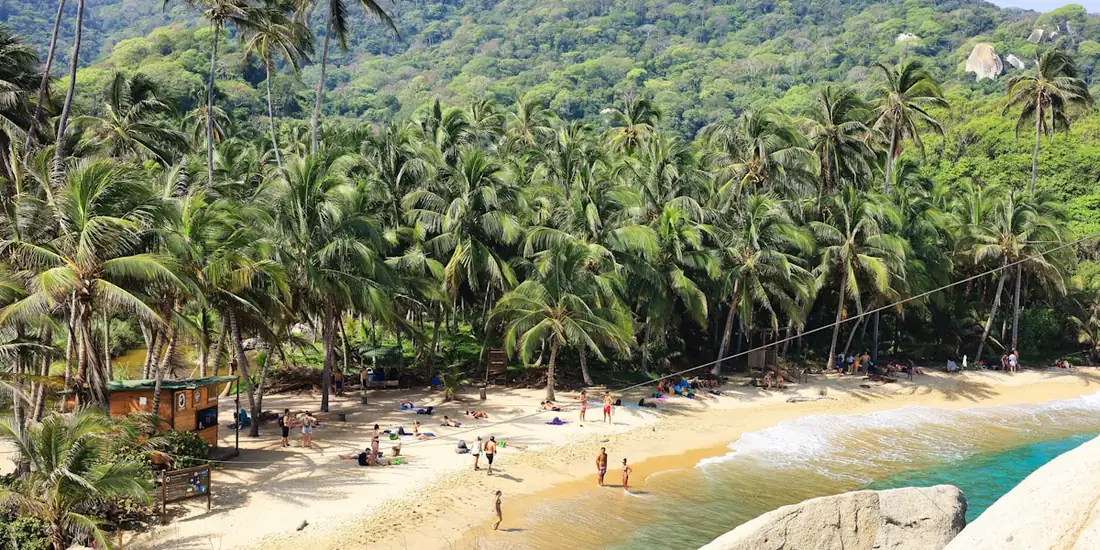
Vibe: Small, laid-back, and full of people who washed up here for a week and stayed for a month. The bay is beautiful, the sunsets are genuinely special, and the vibe is more hostel-common-room than co-working-office. It's beloved by divers — Poseidon Dive Centre is one of the most established PADI outfits on this stretch of coast.
Rent: Monthly furnished rentals run 800,000–1,400,000 COP for a one-bed, though the quality varies wildly. Many places are rented informally — word of mouth and Facebook groups are more useful than apps here.
Practical stuff: There's one small supermarket and a handful of tiendas. Electricity cuts happen. WiFi is inconsistent. If your work depends on a reliable connection, Taganga will test your patience.
Who it suits: People who work in short bursts, dive instructors, artists, anyone doing a longer sabbatical rather than serious remote work.
Downside: Limited infrastructure, occasional power issues, and it can feel quite small very quickly. Transport back to Santa Marta runs frequently during the day but gets sparse after 9pm.
Mamatoco — The Local Pick
Mamatoco is an inland residential neighbourhood that most travellers bypass entirely, which is exactly why it's worth mentioning. It's where middle-class samarios (people from Santa Marta) actually live — not a tourist area, not particularly polished, but genuinely functional and significantly cheaper than the beachside options.
Vibe: Quiet residential streets, corner tiendas, kids playing football, and the kind of neighbourhood where your neighbours will know your name within a week. It's not walkable to the beach, but it's well-connected by bus and mototaxi. Safety is generally fine during the day; standard urban awareness applies at night.
Rent: One of the most affordable options in the city — furnished one-beds from 700,000–1,200,000 COP/month. Unfurnished apartments drop further, around 500,000–800,000 COP.
Practical stuff: Good local market access, tiendas everywhere, and a short taxi ride to the nearest Éxito. This is where your money goes furthest if you're on a budget.
Who it suits: Budget-conscious nomads, people planning a longer stay who want to live like a local rather than a tourist, Spanish learners who'll get more immersion here than anywhere else on this list.
Downside: You're not going to stumble into a coworking space or a craft beer bar. Life here requires a bit more planning and Spanish confidence.
How to Actually Find an Apartment
Apps are a starting point, not the full picture. Finca Raíz (finca raiz.com.co) and Properati are the main property portals and worth checking, but listings in Santa Marta are patchier than in Medellín or Bogotá.
Facebook groups are genuinely useful — search "Arriendo Santa Marta" or "Expats Santa Marta" and you'll find landlords posting directly, often with negotiable prices and no agency fees.
Walking around and looking for "Se Arrienda" signs (that's "For Rent") remains one of the most effective strategies, especially in Bello Horizonte and Mamatoco where informal landlords don't bother with the apps. Take photos of the numbers, WhatsApp them directly, and be ready to view same-day — good cheap apartments move fast.
A few practical notes: most landlords will ask for a depósito (deposit) equivalent to one or two months' rent. If you're a foreigner without a Colombian cédula (ID), some landlords will want a codeudor (guarantor) — a local who vouches for you financially. This is genuinely tricky without local connections. One workaround is to offer two or three months upfront, which tends to resolve the hesitation quickly.
Month-to-month contracts are more common here than in bigger cities, which is great for flexibility but means you might get asked to leave with 30 days' notice if the landlord finds a higher-paying tourist booking. Get the terms in writing, even if it's just a WhatsApp message confirming the arrangement.
Thinking of Buying in Santa Marta?
If you're considering making Santa Marta your permanent base or investment destination, [Maia Realty](https://maia-realty.com) specialises in Santa Marta property for foreign buyers. They handle everything from property search to legal completion.
👉 [Browse Santa Marta listings at Maia Realty →](https://maia-realty.com)
The Bottom Line
Santa Marta rewards people who engage with it properly. If you're looking for the best balance of livability, price, and beach access, Bello Horizonte is the most consistent answer for digital nomads. Families and comfort-seekers will find El Rodadero easier. Budget travellers and genuine immersion-seekers should look seriously at Mamatoco. And if you want colonial atmosphere and don't need silence, the Centro Histórico will keep you entertained indefinitely.
Don't rush the decision — spend your first week or two in a short-term rental or guesthouse and walk the neighbourhoods yourself. The right fit becomes obvious pretty quickly once you're on the ground.
Sponsored content
Maia Realty
Find your ideal property in Colombia with Maia Realty