Digital Nomad Guide to Cartagena, Colombia (2026)
Everything you need to know about living and working remotely in Cartagena in 2026 — from coworking spaces and café wifi to visa rules, monthly budgets, and the neighbourhoods worth your time.
import AffiliateCTA from '@/components/AffiliateCTA';
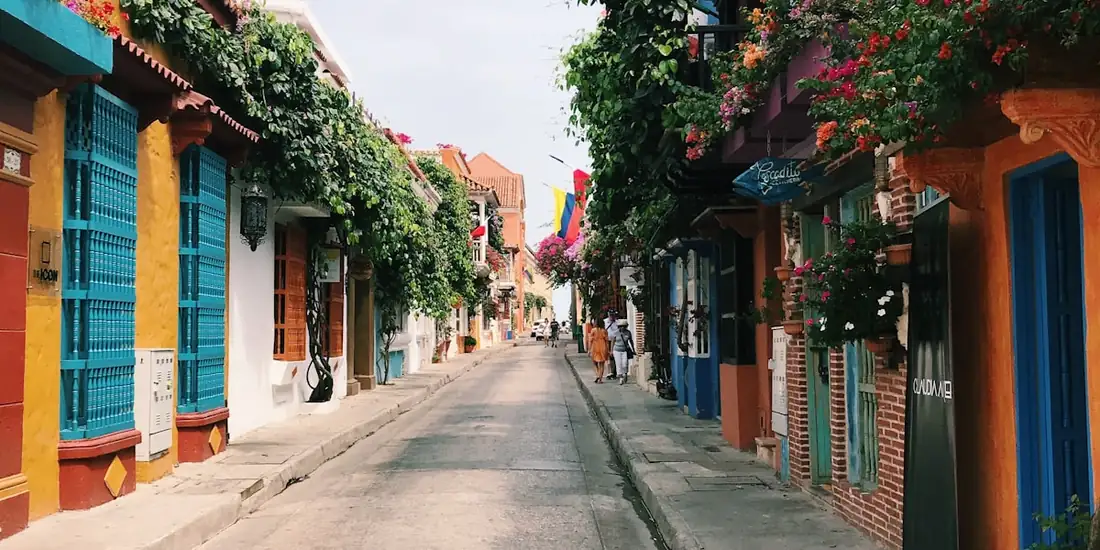
Cartagena is complicated. It's stunning, sweaty, occasionally chaotic, and more expensive than most of Colombia. It's also one of the few places in the country where you can finish a video call, walk two minutes, and be standing in front of a 400-year-old colonial wall eating a bollo de choclo (a steamed maize cake, excellent for 3,000 COP). Whether it works for you as a base depends almost entirely on which neighbourhood you pick and what your tolerance is for heat. Let's get into it.
<AffiliateCTA type="hotels" city="Cartagena" />
<AffiliateCTA type="flights" city="Cartagena" />
Internet and Connectivity
The internet situation in Cartagena has improved significantly but still lags behind Medellín and Bogotá. In well-set-up apartments in Bocagrande, El Laguito, or Manga, you can get fibre connections from Claro Fibra or Tigo running 100–300 Mbps for around 80,000–120,000 COP per month. ETB has expanded its Cartagena coverage but remains patchier here than in the capital — worth checking availability at your specific address before committing.
The honest reality: speeds inside the Walled City (Ciudad Amurallada) and Getsemaní are less consistent. The infrastructure in those historic neighbourhoods is older, and many boutique hotels and short-term rentals run off shared connections that buckle under load. If you're doing heavy video calls or uploading large files daily, confirm the actual connection before you sign a lease — ask for a speed test screenshot, not just the advertised package.
For a backup, always carry a SIM with data. Claro and Tigo have the best 4G/5G coverage across Cartagena and the surrounding coast. A 30-day prepaid plan with 30–50 GB runs roughly 35,000–55,000 COP. Buy your SIM at any official Claro or Tigo store (avoid street vendors for SIMs — activation issues are common) and bring your passport. The Mi Claro and Mi Tigo apps make top-ups and plan management straightforward.
Coworking Spaces
Cartagena's coworking scene is smaller than Medellín's but has matured properly over the past few years.
Selina Cartagena (Calle del Pozo, Getsemaní) remains the most internationally connected option. Their coworking day pass runs around 45,000–55,000 COP, with monthly memberships from 650,000–800,000 COP. The wifi is solid (typically 50–80 Mbps), there's air conditioning, standing desks in the main work area, and the hostel social scene means you'll meet other nomads without trying. It gets noisy by afternoon when the common area fills up, so front-load your deep-work hours.
Atom House (Bocagrande) is a quieter, more professional setup aimed at longer-stay residents. Day passes hover around 40,000 COP, monthly around 550,000–700,000 COP. The air conditioning is genuinely cold (a bigger deal than it sounds in 35°C heat), and the crowd skews towards Colombian freelancers and remote workers — good for integrating rather than just hanging out with other tourists.
La Serrezuela Creative District has a cluster of creative studios and flexible work spaces worth exploring near the old railway building. Prices vary by operator but expect 35,000–50,000 COP for a day pass. The vibe is artsy and local, and the architecture is interesting enough that it won't feel like a WeWork in Slough.
If you need a dedicated desk or private office, ask about monthly rates directly — most spaces will negotiate, especially for 3-month+ commitments.
Best Cafés for Working
Working from cafés in Cartagena requires some strategy. Air conditioning is non-negotiable for most people; a café without it becomes unworkable by 10am.
Café Astrid & Gastón (El Centro) has reliable wifi, decent plugs, and makes one of the better cortados in the city. It's calm during weekday mornings — expect 14,000–18,000 COP for a coffee and something light. Wifi typically clocks at 20–40 Mbps, which handles calls fine.
Juan Valdez (multiple locations including Bocagrande and the airport) is predictable in the best way — air conditioned, plugs at most seats, consistent wifi around 25–50 Mbps, and nobody will move you on after one coffee. A café americano is about 9,000–12,000 COP. It's not the most exciting option but it reliably works.
Deps (Manga neighbourhood) is a local favourite with strong espresso, fast wifi, and a quieter residential-neighbourhood atmosphere that makes it easier to focus. Budget around 10,000–15,000 COP per drink. It fills up on weekend mornings but weekday afternoons are ideal.
One practical note: always ask "¿Hay enchufes disponibles?" (Are there plugs available?) before sitting down. Many cafés in the historic centre have beautiful interiors and terrible plug access.
Visa Situation
As of 2026, most nationalities can enter Colombia on a tourist visa (visa de turismo) and stay 90 days, extendable by another 90 days at the Migración Colombia office in Cartagena (Avenida El Lago, near the Ejecutivo shopping centre). The extension costs around 250,000–300,000 COP and needs to be done before your initial 90 days expire. Don't leave it to the last week — the queue and processing time are real.
Colombia's Digital Nomad Visa (officially the Visa de Nómada Digital, visa category V) allows stays of up to 2 years and is designed specifically for remote workers. Requirements include: proof of remote work or self-employment, a minimum monthly income of approximately 3 times the Colombian minimum wage (roughly 4,000,000–4,500,000 COP as of 2026, but check current Migración Colombia guidance as this shifts), valid health insurance with Colombia coverage, and the usual documentation (clean criminal record, passport photos, etc.). The application is done online via the Migración Colombia portal and costs around 52 USD. Processing typically takes 3–10 business days.
If you're planning to stay more than 6 months, the digital nomad visa is worth the paperwork. It also makes opening a Colombian bank account considerably easier.
Best Neighbourhoods for Nomads
Bocagrande is the practical choice — it's walkable, has the best supermarkets (Éxito and Carulla are both here), reliable apartment internet, proximity to the beach, and a concentration of restaurants and gyms. It's not the most atmospheric neighbourhood but it functions. Rents for a furnished one-bedroom run 2,200,000–3,500,000 COP per month depending on building quality and view.
Manga is the underrated option. It's a residential island neighbourhood connected to the centre by a short bridge, quieter than Bocagrande, with a local feel, decent café scene, and rents that are slightly more reasonable: 1,800,000–2,800,000 COP for a furnished one-bedroom. Walkable to Getsemaní and the Walled City without being in the middle of the tourist chaos.
Getsemaní is the neighbourhood most nomads romanticise before they actually try to work from their apartment there. It's genuinely cool — murals, good bars, the best street food, strong community energy — but it's also loud, the buildings are old, and the wifi situation in many rentals is inconsistent. Great for a week, harder as a long-term base. Rents range widely: 1,500,000–3,000,000 COP for short-term furnished options.
The Walled City is more or less tourist accommodation with beautiful wrapping. Spectacular to walk around, difficult to actually live in at a reasonable price. Save it for day trips and evening rumbas (nights out).
Nomad Community
Cartagena's nomad community is smaller and more transient than Medellín's, which is either a feature or a bug depending on your personality. The Nomads in Cartagena Facebook group is active and useful for apartment recommendations, event announcements, and the inevitable "is this neighbourhood safe?" questions. InterNations Cartagena runs monthly events that attract a mix of expats, long-term residents, and passing nomads.
Selina's calendar is worth monitoring for weekly social events — their Wednesday tertulia (informal social gathering) nights and occasional rooftop events are genuinely good for meeting people. WhatsApp groups are where most real logistics happen in Colombia; ask at any coworking reception desk to be added to local nomad and expat chats.
Monthly Budget Breakdown
Here's a realistic comfortable-but-not-extravagant budget for Cartagena in 2026:
- Accommodation (furnished 1-bed, Bocagrande or Manga): 2,200,000–2,800,000 COP
- Coworking (monthly membership): 550,000–800,000 COP
- Groceries: 400,000–600,000 COP
- Eating out (mix of corrientazos at 12,000–18,000 COP and nicer spots): 500,000–900,000 COP
- Transport (Uber, occasional taxi, no car needed): 150,000–250,000 COP
- Mobile data: 40,000–55,000 COP
- Utilities (usually included in furnished rentals, but if not): 120,000–200,000 COP
- Entertainment, beach clubs, occasional night out: 300,000–600,000 COP
Total: approximately 4,260,000–6,205,000 COP per month (roughly 1,000–1,450 USD at current rates). That's noticeably higher than Medellín or Manizales for a comparable lifestyle.
Health Insurance
For nomads on a tourist visa, SafetyWing Nomad Insurance remains the most practical entry-level option at around 45–55 USD per month. It covers emergency medical and some routine care, and it satisfies the health insurance requirement for the digital nomad visa application.
For anything more comprehensive, Cigna Global, Allianz Care, or AXA international plans offer better coverage but cost 100–300+ USD monthly depending on age and coverage level. If you take out the digital nomad visa and plan to stay a full year, it's worth the upgrade.
If you become a legal Colombian resident at any point, you can join the public health system via an EPS (Entidad Promotora de Salud) as a cotizante (contributor). Contributions are approximately 12.5% of declared income. The public hospitals in Cartagena are functional for emergencies; for anything non-urgent, most expats use private clinics — Clínica Gestión Salud and Clínica Blas de Lezo are the well-regarded options.
Cartagena vs Other Nomad Hubs
Compared to Medellín: Medellín wins on infrastructure, coworking density, cooler climate, and cost-efficiency. Cartagena wins on aesthetics, beach access, and the kind of slow mornings that make you remember why you went remote in the first place.
Compared to Santa Marta: Santa Marta is cheaper and has better beach and jungle access (Tayrona National Park is on the doorstep), but the nomad infrastructure is thinner and the city itself is less polished.
Compared to Mexico City or Lisbon: Cartagena is harder work — infrastructure is less reliable, the heat is punishing, and the cost-to-quality ratio for accommodation is less favourable. But it offers something neither of those cities does: the feeling of being genuinely off the main nomad circuit, with a culture and coastline that are entirely its own.
Cartagena works best as part of a longer Colombia rotation — a month or two here alongside time in Medellín and the coffee region gives you a more complete picture of the country than any single base would. If you're here for the architecture, the coast, and the pace, you'll leave planning to come back. Just get your coworking sorted before the heat does.
Sponsored content
LlevaLleva
Connect with your local community on LlevaLleva