Digital Nomad Guide to Santa Marta, Colombia (2026)
Everything you need to know about working remotely from Santa Marta — internet speeds, coworking spaces, neighbourhoods, visa options, and honest monthly costs for 2026.
import AffiliateCTA from '@/components/AffiliateCTA';
Santa Marta doesn't get the same nomad buzz as Medellín or Bogotá, and honestly? That's part of the appeal. The city sits at the edge of the Sierra Nevada, five minutes from the Caribbean, and has been quietly building out the kind of infrastructure that makes remote work genuinely viable. If you want mountains, beaches, and a reasonably functional fibre connection without fighting for a seat at a packed coworking space, Santa Marta in 2026 is worth a serious look.
<AffiliateCTA type="hotels" city="Santa Marta" />
<AffiliateCTA type="flights" city="Santa Marta" />
Here's the honest, practical breakdown.
Internet: What to Actually Expect
The internet situation in Santa Marta has improved considerably since 2023, though it's still not Medellín. In established residential neighbourhoods like El Rodadero, Minca Road-adjacent areas, and the Centro Histórico, fibre connections are now widely available.
Claro Fibra is the most widely available provider and offers residential plans from around 85,000–120,000 COP/month for 200–500 Mbps. Real-world speeds are typically 150–350 Mbps down on a good day, though upload speeds can lag. Tigo is a solid alternative with competitive pricing — expect similar plans in the 90,000–130,000 COP range. ETB has expanded its footprint in the Caribbean coast more recently and is worth checking if you're renting in the Centro or Bello Horizonte areas; plans start around 95,000 COP/month.
In short-term rentals and coliving spaces, speeds vary wildly. Always run a speed test before signing anything — Airbnb hosts in Santa Marta are notorious for listing "WiFi" when they mean a 10 Mbps DSL line shared across eight apartments. Bring a SIM as backup.
Key advice: If you're signing a lease, ask specifically for fibra óptica (fibre optic) and confirm the actual contracted speed. Many buildings in the Centro Histórico are still running on older copper infrastructure.
SIM Cards and Mobile Data
Your first stop after landing should be a Claro, Tigo, or WOM store — all have branches on Carrera 5 near the Centro. WOM has been aggressively competitive on price and often offers the best prepaid data deals for nomads: around 35,000–50,000 COP for 20–30 GB monthly data packages.
Claro's 4G/LTE coverage is the most reliable across the city and into areas like Taganga and El Rodadero. If you're planning trips to Minca or Palomino, Claro wins hands down — the other carriers get patchy fast once you're up into the mountains.
For a backup data SIM, it's worth keeping a Tigo number active. Redundancy is your friend when your Zoom call is due in ten minutes.
Coworking Spaces
Santa Marta's coworking scene is small but functional. Don't expect the polished megaspaces of El Poblado — what you get here is more laid-back, with better air conditioning than you'd expect.
CoWork Santa Marta (Calle 19 with Carrera 3, Centro Histórico) is the most established option. Day passes run 35,000–45,000 COP, and monthly hot desks go for around 380,000–480,000 COP. They have reliable fibre, a decent espresso machine, standing desks on request, and a small meeting room you can book by the hour. The community skews towards Colombian freelancers and the odd visiting nomad. Air conditioning is solid, which matters — the Centro gets brutally hot from 11am onward.
Nómada Workspace (Rodadero area, near Calle 10) is the newer option and has attracted more of the international crowd. Day passes are 40,000 COP, monthly memberships from 420,000 COP. Better high-speed internet (they're running symmetric 500 Mbps Claro Fibra), phone booths for calls, and a rooftop terrace that's usable from 5pm once the heat drops. This is where you're more likely to meet other remote workers passing through.
If you're on a tight budget, some coliving spaces like Casa Nómada Santa Marta bundle workspace access with accommodation — the combo packages typically run 1,800,000–2,500,000 COP/month including a private room, which undercuts renting separately by a meaningful margin.
Best Cafés for Working
Working from cafés in Santa Marta is viable, with a few caveats. The heat means you're hunting for places with strong AC or a genuinely shaded terrace. Plug sockets are less consistently available than in Medellín café culture.
Café Ikaro (Calle 19, Centro Histórico) is the standout. Excellent Colombian single-origin coffee (a tinto or café filtrado runs 4,000–7,000 COP), consistent WiFi around 40–60 Mbps, and they're genuinely tolerant of laptop workers — you won't get the side-eye after an hour. Plugs available at most tables. Gets busier after 10am, so arrive early to claim a spot.
La Tiendecita del Café near the Parque de los Novios is more of a local gem — smaller, louder on weekends, but the WiFi holds up and the tinto is some of the best in the Centro. Budget 5,000–8,000 COP for coffee. Not a dedicated work café, but it works for focused mornings.
In El Rodadero, Café del Mar (literally seafront) has improved its connectivity in the last year and now runs a stable 30–50 Mbps connection. Good for afternoon working sessions once you've moved away from the tourist-dense hours.
Neighbourhoods for Nomads
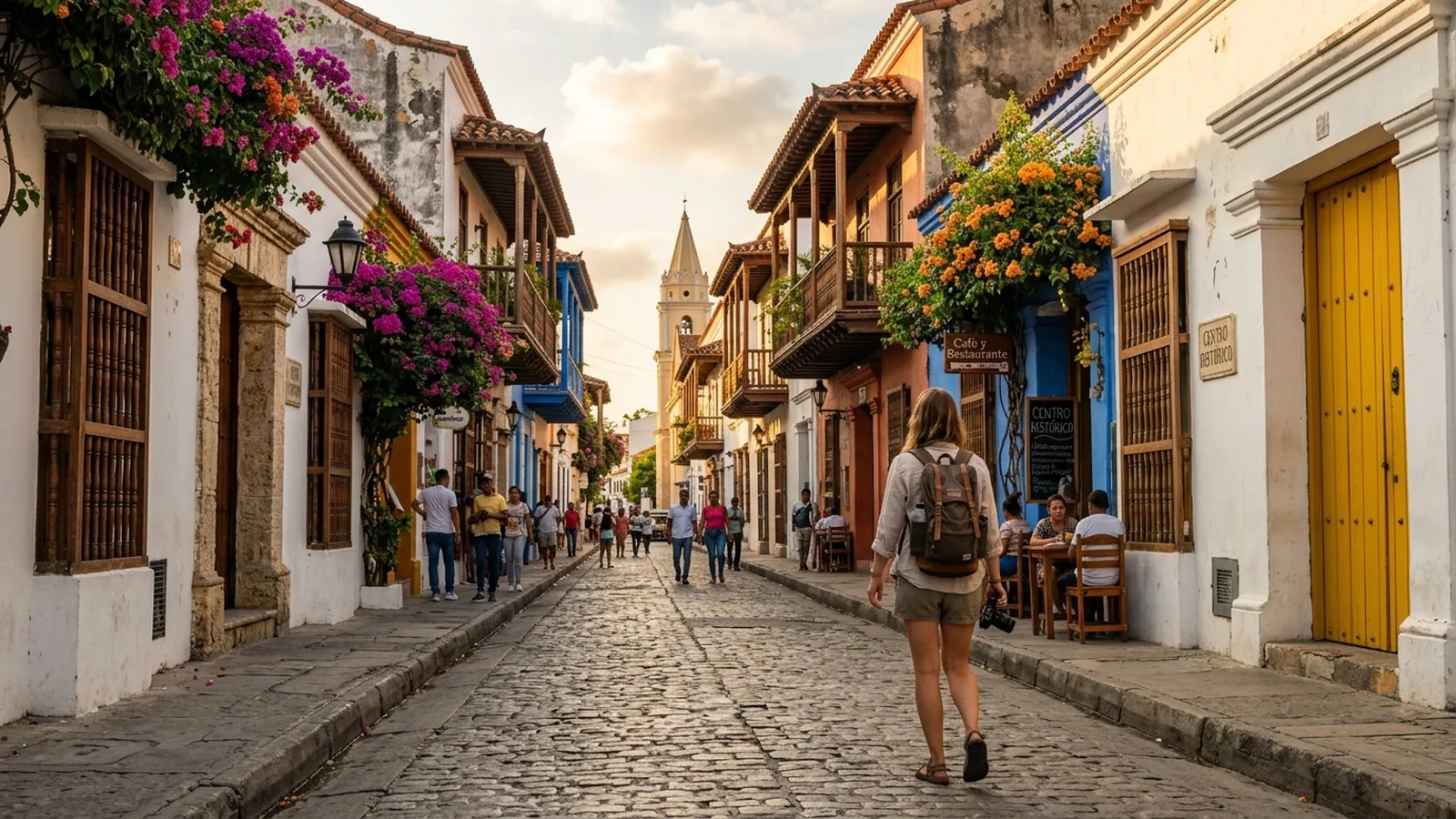
Centro Histórico is the most characterful option — colonial architecture, walkable, close to restaurants and culture, and increasingly safe in the core blocks around Parque Bolívar and Parque de los Novios. Rent for a decent one-bedroom apartment runs 1,200,000–1,800,000 COP/month unfurnished, or 1,600,000–2,400,000 COP furnished. Street noise and heat are the trade-offs.
Bello Horizonte is the quieter, slightly more residential choice popular with longer-term expats. Better breeze off the sea, less noise, slightly more spread out. Expect 1,400,000–2,000,000 COP/month for a decent one-bed. Less walkable to coworking but close to the beach road.
El Rodadero is the beach resort zone — great if you want sand on tap, less great if you want a genuine neighbourhood feel. More Airbnb-heavy, prices reflect the short-term market: furnished one-beds start around 2,000,000 COP/month if you negotiate a monthly rate directly with owners.
Taganga is nearby and popular with backpackers, but the internet infrastructure is still patchy and it's not genuinely walkable to city infrastructure. Skip it as a base unless you're only staying a week and don't have heavy call schedules.
Visa Situation
The standard entry is a tourist visa (visa de turismo): 90 days on arrival for most nationalities, extendable once at Migración Colombia for another 90 days — that's 180 days total in a calendar year. Extensions cost around 226,000 COP and are handled at the Migración office in Santa Marta or increasingly via their online portal (migracioncolombia.gov.co).
Colombia's Digital Nomad Visa (Visa de Nómada Digital) launched in 2022 and has been running steadily since. Requirements as of 2026:
- Proof of remote employment or freelance income of at least 3x the Colombian minimum wage monthly (roughly 4,500,000–5,000,000 COP, though this shifts annually)
- Employment contract or client contracts demonstrating you work for foreign companies/clients
- Health insurance with Colombian coverage
- Application fee: approximately 52 USD processed through the Cancillería portal
The visa grants up to two years and is renewable. The practical advantage over tourist visa chaining is legitimacy and peace of mind — it also gives you access to open a Colombian bank account more easily.
Health Insurance
If you're on the tourist visa, SafetyWing Nomad Insurance remains the most popular option among the nomad crowd — plans start around 45–56 USD/month depending on your age, cover emergency medical, and include limited coverage within your home country. It's not comprehensive, but it covers the scenarios that actually ruin trips.
Cigna Global and AXA IPPF are the premium tier if you want serious international health cover — expect 150–300 USD/month depending on age and coverage level.
If you've secured the Digital Nomad Visa and plan to stay long-term, you can voluntarily affiliate with Colombia's EPS (Entidad Promotora de Salud) system. SURA and Sanitas are the most recommended EPS providers among expats. Contributions are income-based but voluntary affiliates typically pay around 12.5% of a declared monthly income — on a declared 5,000,000 COP/month, that's roughly 625,000 COP/month for solid local healthcare access. For most nomads staying under six months, international insurance is the simpler route.
Monthly Budget Breakdown
Here's a realistic comfortable-nomad budget for Santa Marta in 2026:
| Expense | Monthly Cost (COP) | |---|---| | Furnished apartment (Centro/Bello Horizonte) | 1,700,000–2,200,000 | | Coworking membership | 420,000–480,000 | | Groceries (cooking at home regularly) | 400,000–600,000 | | Eating out (mix of corrientazos and restaurants) | 350,000–600,000 | | Transport (taxis, InDriver, Moovit bus) | 120,000–200,000 | | Mobile data + SIM | 45,000–60,000 | | Health insurance (SafetyWing) | ~200,000 | | Entertainment, day trips, nightlife | 200,000–400,000 | | Total | ~3,435,000–4,740,000 COP |
That's roughly 850–1,170 USD/month at current exchange rates — genuinely competitive, though not Chiang Mai cheap.
A corrientazo (the set lunch staple: soup, main, juice, and often dessert) runs 12,000–18,000 COP at local spots. Dinner at a mid-range restaurant in the Centro? Budget 35,000–60,000 COP per person. A beer at a neighbourhood bar runs 5,000–8,000 COP.
Nomad Community
The community is small but real. Facebook group "Digital Nomads Santa Marta" is the most active online space — post when you're arriving and someone will almost always respond with current recommendations or invite you to something. Internations Santa Marta runs occasional meetups, though Barranquilla and Cartagena chapters are more active.
WhatsApp groups are where most of the day-to-day coordination happens — ask at CoWork Santa Marta or Nómada Workspace when you arrive and you'll get added to the relevant ones quickly. The nomad scene here is the kind where people actually show up to beach Sundays and sunset beers rather than just following each other on Instagram.
Santa Marta vs Other Colombian Hubs
vs Medellín: Medellín wins on infrastructure, coworking density, social scene, and year-round spring climate. Santa Marta wins on beach access, lower tourist-scene fatigue, and a more authentic Colombian pace.
vs Cartagena: Cartagena is more expensive, more touristy, and increasingly developed for the wrong reasons. Santa Marta is cheaper and has better mountain access. Cartagena has better nightlife if that's your metric.
vs Bogotá: Bogotá has the best internet, the most sophisticated food and culture scene, and the worst weather. Santa Marta has the Caribbean. Different kind of trip.
vs Playa del Carmen (Mexico): Santa Marta is considerably cheaper, less built-out for the nomad market, and has more of a genuine local feel. Playa's infrastructure and community are more polished. Colombia wins on cost and authenticity; Mexico wins on convenience.
Honest Pros and Cons
Pros: Beach and mountains in the same postcode, lower cost of living than Medellín or Cartagena, improving internet infrastructure, warm and genuinely welcoming locals, Tayrona National Park on your doorstep, less saturated nomad scene.
Cons: Heat is relentless from 11am–5pm most of the year, coworking options are still limited compared to larger cities, the Centro can be noisy at night, power outages (cortes de luz) still happen during peak season, and the nomad community is thin enough that if you need a dense social scene immediately, you might feel it.
Thinking of Staying Longer? Thinking of Buying?
If you're considering making Santa Marta your permanent base or investment destination, [Maia Realty](https://maia-realty.com) specialises in Santa Marta property for foreign buyers. They handle everything from property search to legal completion.
👉 [Browse Santa Marta listings at Maia Realty →](https://maia-realty.com)
If you can handle the heat and you're not dependent on a huge nomad network to function, Santa Marta in 2026 is a genuinely underrated base — and you'll have those Tayrona sunsets mostly to yourself.
Sponsored content
LlevaLleva
Connect with your local community on LlevaLleva